
Marine Air Conditioning Battery Runtime Measurement Log
Use an energy log to separate running demand, battery reserve and next-day recharge when planning cooling at anchor.
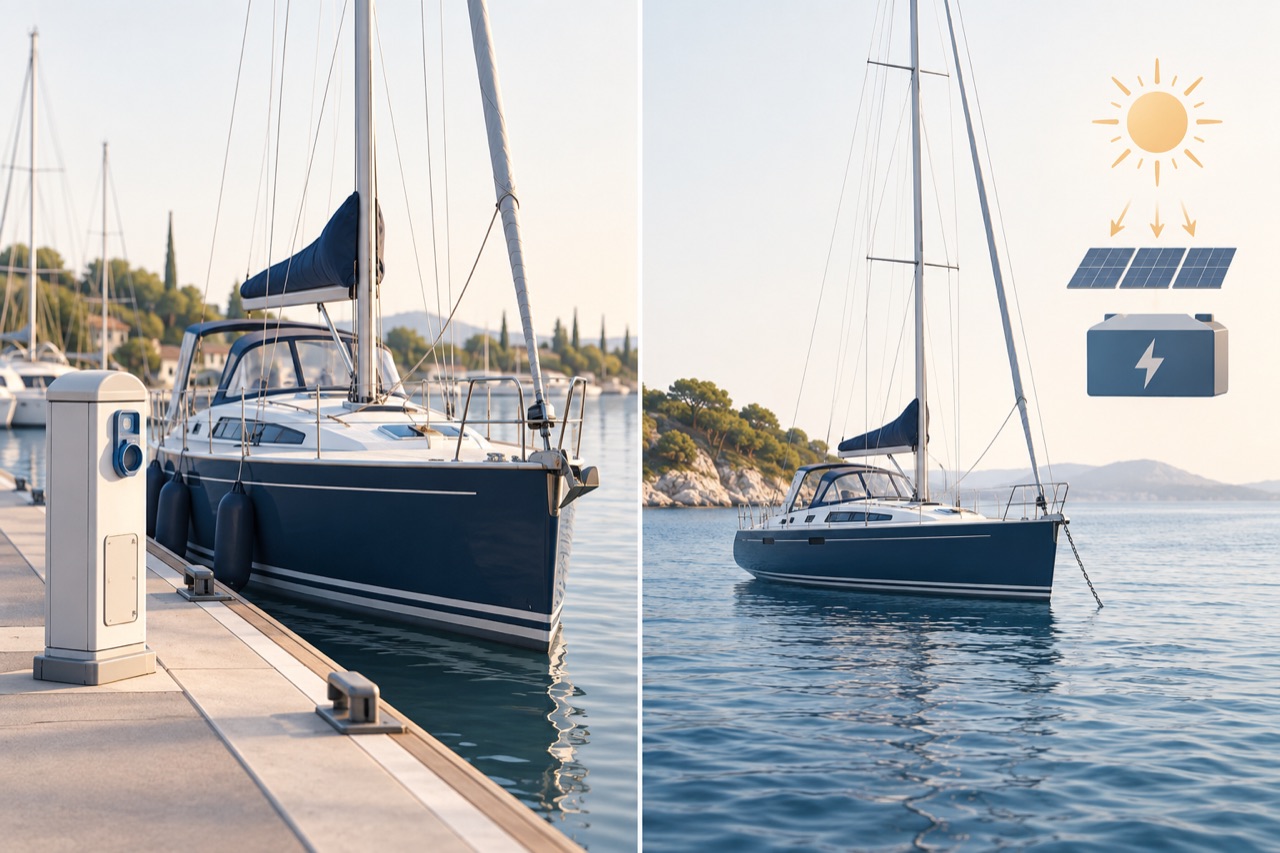
An overnight energy plan needs three answers: how much the system uses, how much stored energy is available, and how that energy will be replaced. A nominal battery capacity or a compressor’s running current answers only part of the question. Use monitored data where available and ask an electrical specialist to assess the bank, inverter, cabling and protection before adding significant loads.
Measuring Overnight Air Conditioning Energy Use
Record the starting and ending energy readings from a suitable installed monitor, alongside the cooling setting, occupied cabins, outside conditions and other loads. Note when the compressor actually runs if the controller reports it. A cool evening after sunset is not a useful stand-in for a hot, humid night. Do not open electrical enclosures or improvise measurement connections to collect these readings.
Battery kWh, Usable Capacity and Overnight Reserve
Energy is measured in watt-hours or kilowatt-hours; power is measured in watts or kilowatts. Amp-hours need a voltage to become an energy estimate. Usable energy also depends on the battery system’s limits and the reserve you retain for other needs. Use the installed system documentation rather than assuming that every labelled amp-hour can be spent on cooling. Include conversion losses where an inverter is involved.
Recharging Boat Batteries After Overnight Cooling
Check the practical recharge window against the following day’s itinerary. Solar output varies with weather, shading and installation, and engine charging depends on the actual system. A successful first night does not prove that repeated nights are sustainable. Compare energy used and energy recovered across several representative days before promising continuous at-anchor comfort to everyone aboard.
Marine Air Conditioning Energy Log Checklist
- Record conditions and other loads with each reading.
- Allow a reserve for essential onboard systems.
- Compare overnight use with actual next-day recovery.
Is this a specification for my boat?
No. This guide helps you prepare observations and questions. Installation details, operating limits and service procedures depend on the vessel and the exact equipment. Use the current manual and a qualified provider to confirm them.
Editorial basis: an original owner-planning checklist, not a product test or a vessel inspection. For model-specific procedures, use the manufacturer’s document library and the official resources. See our editorial policy.
Find Help with Marine Air Conditioning
Choose a state to find where listed businesses are based. Confirm your marina is in their service area and that they handle the work you need.
No YouSail-listed provider is currently shown for this state. You can browse other locations, but confirm coverage before booking.